Understanding Storm Impacts at Sand Beach
Acadia’s Sand Beach has, for decades, been a repetitive scene of erosion and repair. Storms send sand all over the sea floor, and when consistent waves return they gradually put the lost sand back in place. But severe storms are becoming more frequent, giving the beach less time to recover before sands are scattered again. In recent years, storms have washed over the dune and destabilized nearby bluffs.
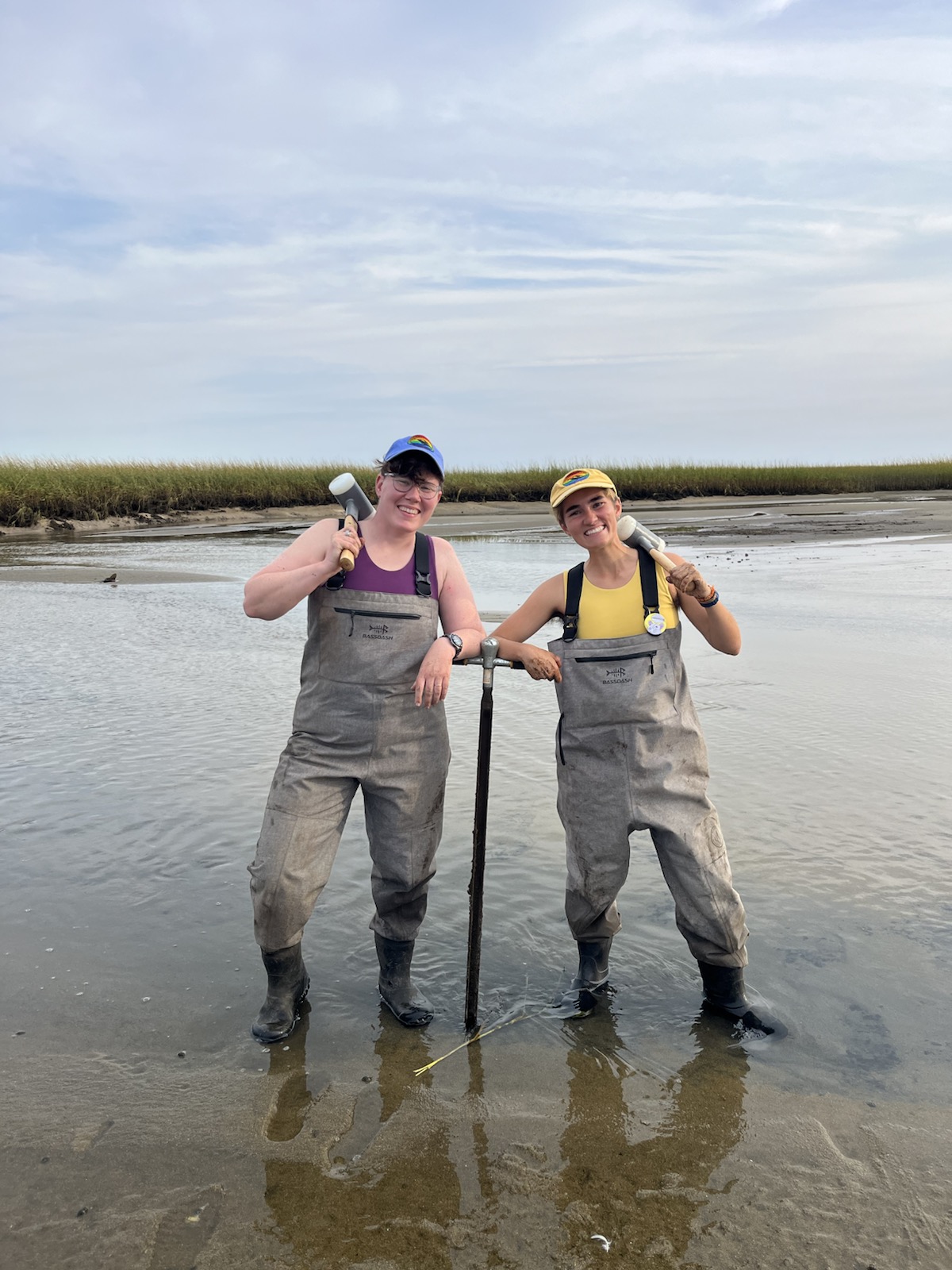
Katie Castagno, of the Center for Coastal Studies, will dig into the past, present, and future of the beach. Working closely with Tommy Tucker, a colleague at the Center, Castagno will bring together several forms of data: sediment cores in the lagoon just beyond the beach will offer a look at the severe storms of the past, while salinity loggers will track present-day inundation of the lagoon with sea water.
The study will also involve contributions from visitors in the form of a Chronolog. Chronologs are stations where the public can record photographs from a fixed platform and add them to a larger timelapse. These photos document the impacts of specific storms on the structure of the beach.
Following data collection, the team plans to offer guidance to park managers responsible for Sand Beach.
Castagno and Tucker also want to make their findings available to park visitors. They look forward to developing scientific engagement programs with the park, so everyone visiting Sand Beach can learn about its millennia-old relationship with the ocean, and how that story might change in the years to come.